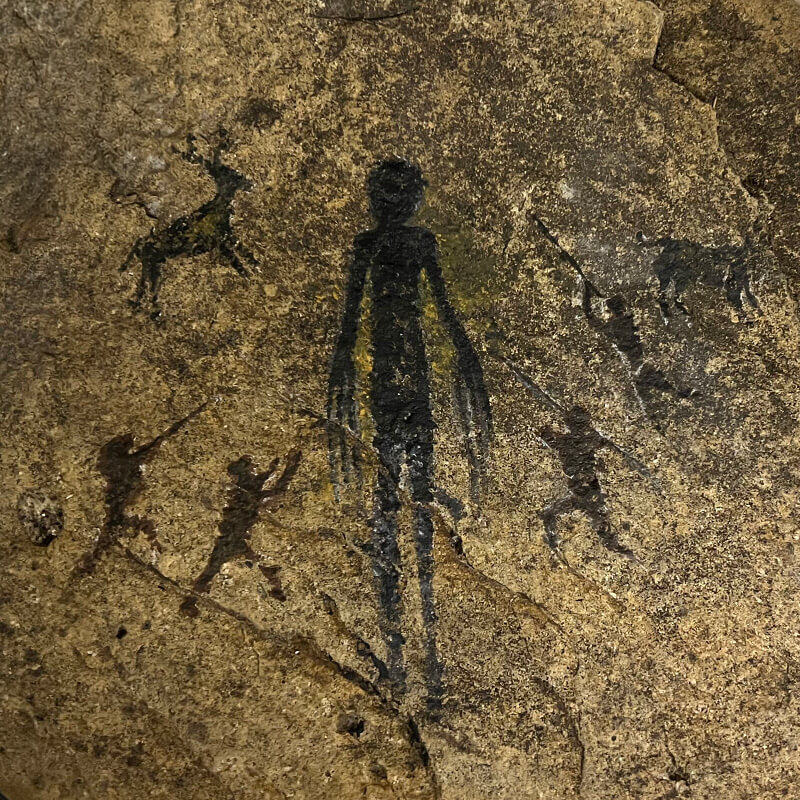
30,000 BCE – Chauvet Cave, France
Discovered in a remote chamber within the Chauvet cave system, the central figure is depicted with unusual proportions unlike the surrounding hunters. Whether spirit, myth or artistic abstraction, its resemblance to later depictions documented within this archive remains difficult to ignore.
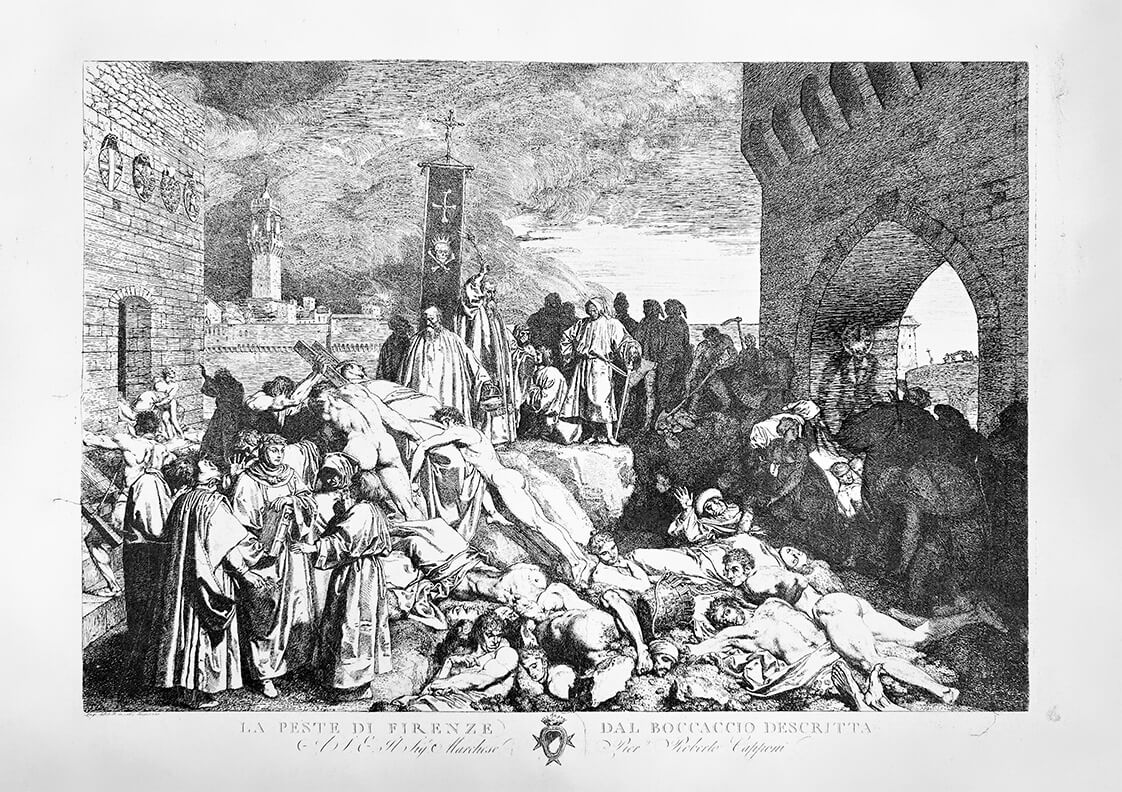
1348 – Florence, Italy
This work captures the grim reality of the Black Death, with the dead and dying scattered throughout the streets of Florence. Upon the wall to the right is a shadowed figure seemingly untouched by the chaos. It does not appear to partake in the tragedy, but rather to bear witness to it, as though death itself had drawn an observer
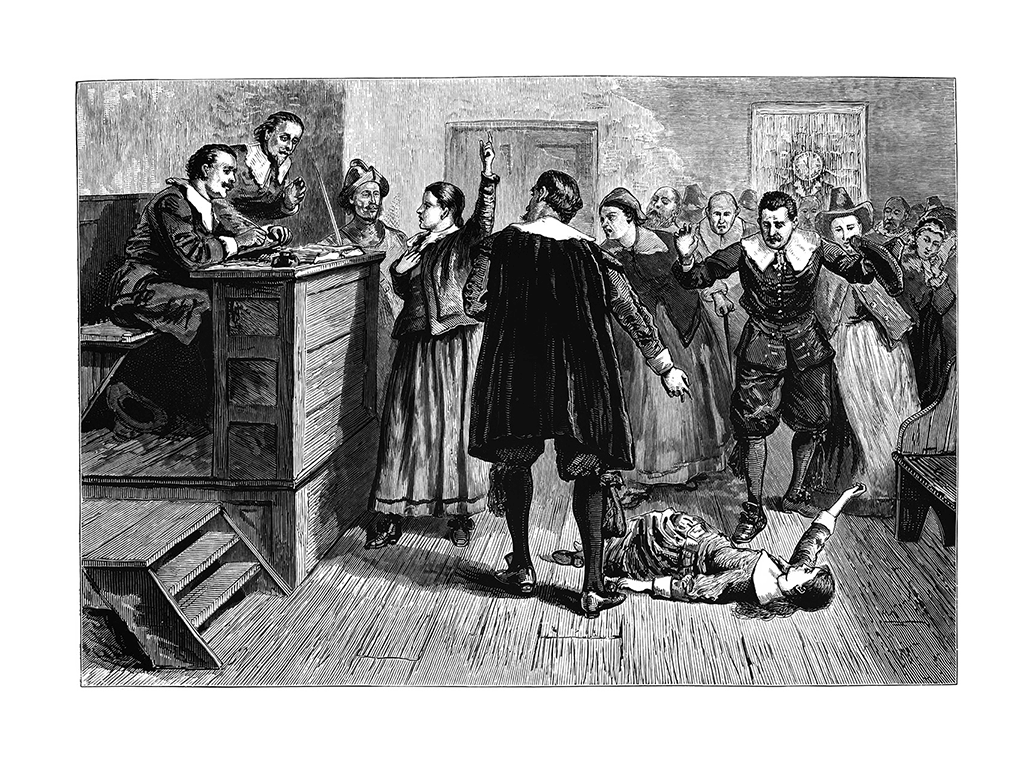
1692 – Salem, Massachusetts
This courtroom scene depicts an accused witch during the Salem trials, surrounded by onlookers as magistrates look down from their bench and a young woman lies collapsed upon the floor. Unlike earlier examples, the figure visible at the window is far more distinct, its silhouette crowned by what appears to be a circular, clock-like head. It is wise to be cautious of coincidence, although I find it increasingly difficult to dismiss the recurrence of such a peculiar figure in artworks associated with death and public tragedy.
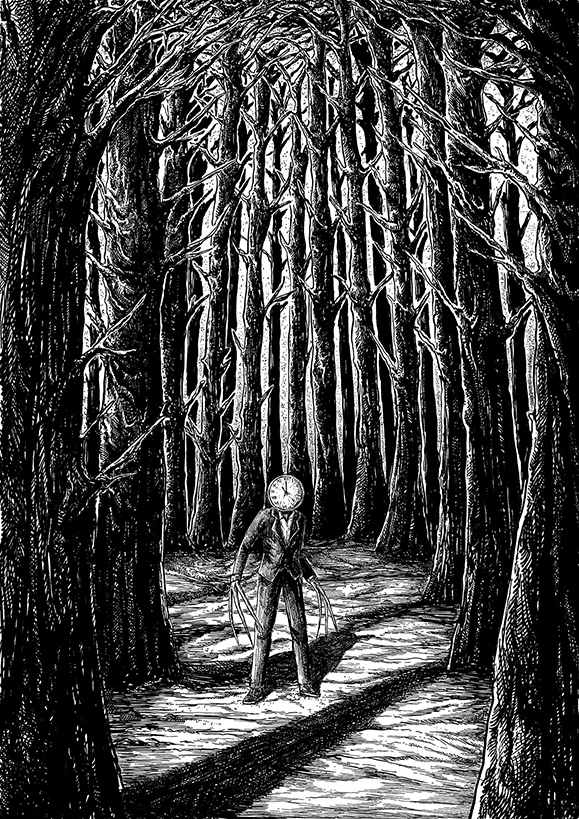
1683 – Northumberland, England
In 1983, I recovered this woodcut whilst investigating an abandoned cottage in Northumberland, a site long associated with local tales of witchcraft. Unlike many of the works within this archive, it leaves remarkably little to interpretation: standing amongst the trees is a figure clothed in dark attire, its hands protruding like tree branches and a head shaped like a clock. This remains the earliest example I have encountered in which this being appears in such explicit detail.
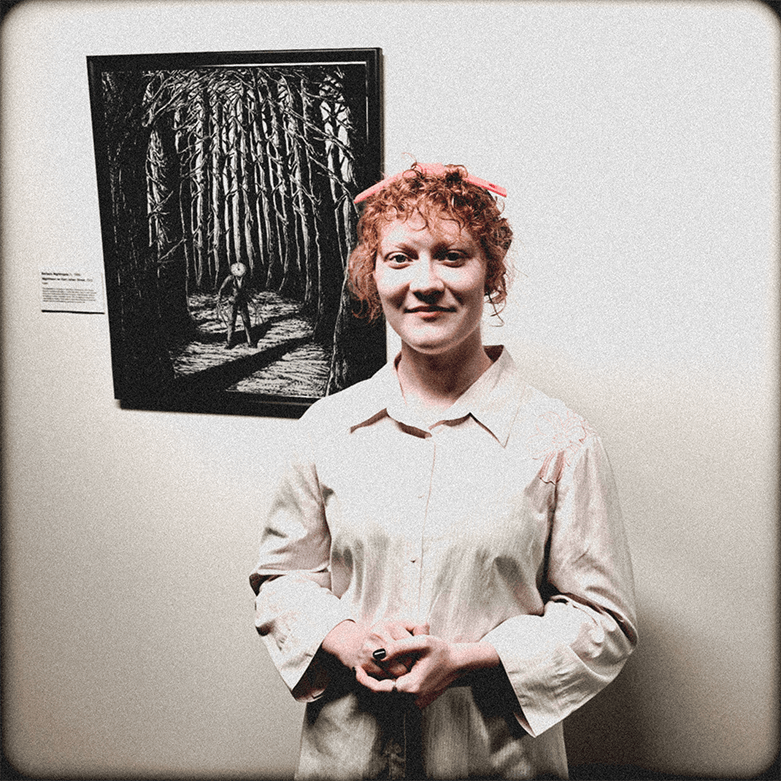
1989 – The Unexplained Exhibition
Upon learning that art curator Barbara Nightingale was collecting mysterious artworks for her exhibition, I donated the woodcut to her collection. It was only later, after examining a painting submitted by the family of Thomas Leewood, that I realised the figure depicted within both works were eerily similar.
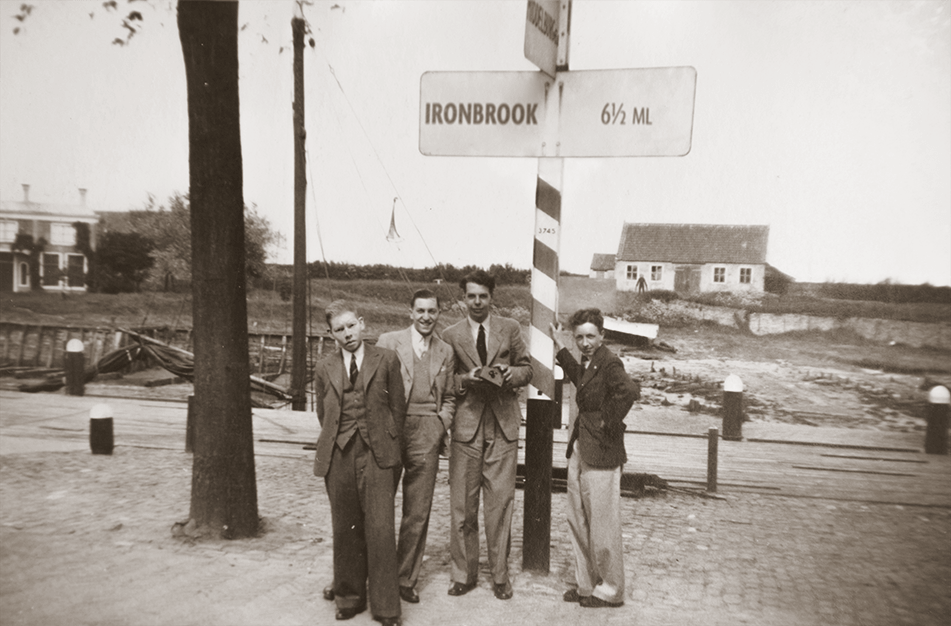
1919 – Queensland, Australia
This photograph shows Thomas Leewood alongside several companions shortly after the conclusion of World War One. Though seemingly unremarkable at first glance, a faint figure can be discerned in the distance beyond the group. Viewing this photograph in the context of Leewood's later experiences, one is left to consider whether the figure described in his writings had ever truly left his side.
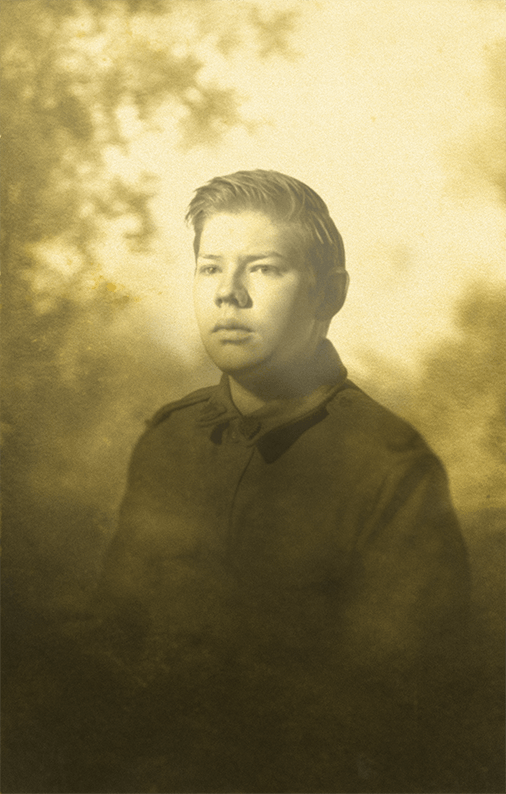
Thomas Leewood, 25th Battalion, AIF
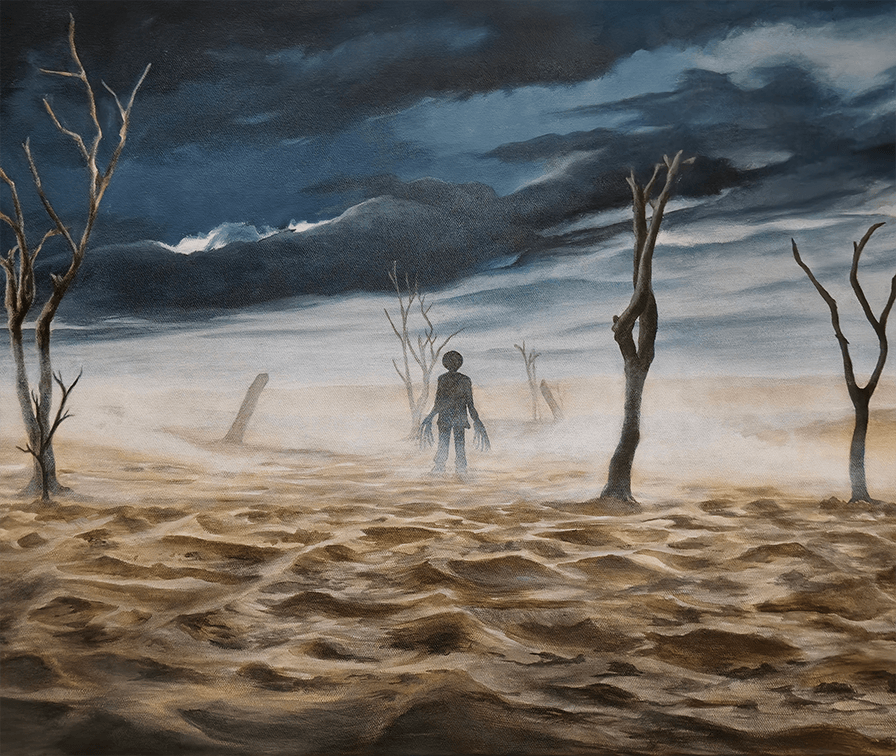
1919 – Queensland, Australia
This painting was donated to Barbara Nightingale's Unexplained Exhibition in 1989 by the descendants of Australian soldier Thomas Leewood. According to family records, Leewood painted the scene three years after his near-death experience in No Man's Land during World War One. Thomas depicted a silent figure that observed him whilst awaiting what he believed would be his death
What first drew my attention was not the painting itself, but the circumstances surrounding its creator. Leewood died under unusual circumstances in 1919, and his family remained convinced until their own deaths that what he witnessed on the battlefield, and what appeared to haunt him in the years that followed, was not the product of trauma or imagination. Looking upon the distant figure in the painting, I find it increasingly difficult to dismiss their conviction entirely